Maximizing AI Potential: Harnessing Vector Databases for LLM and AI Agents
Explore the architecture of vector databases and their critical role in powering large language models and AI agents.
TL;DR
- Vector databases store and manage vector embeddings for AI applications.
- Essential in providing high performance and scalability for LLMs and AI agents.
- EasyClawd simplifies deployment and management of OpenClaw agents.
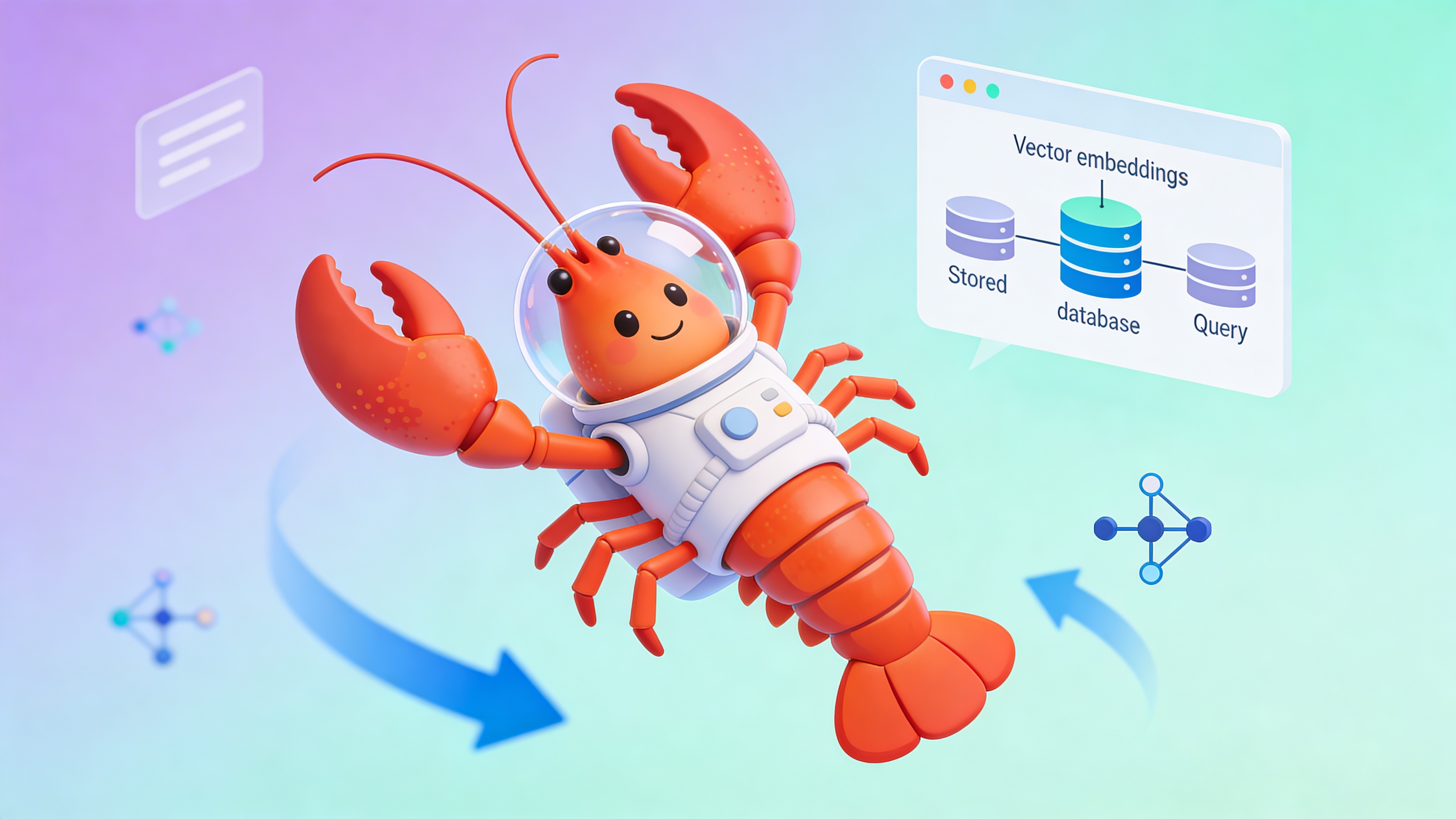
Introduction to Vector Databases in AI
Vector databases are crucial in AI applications, particularly with the rise of large language models (LLMs) and autonomous AI agents.
| Feature | Status | Notes |
|---|---|---|
| CRUD Operations | ✅ | Supports standard operations on vector embeddings. |
| Metadata Filtering | ✅ | Filters results based on metadata attributes. |
| Horizontal Scaling | ✅ | Scales horizontally to manage large datasets efficiently. |
| Cloud-Native Architecture | ✅ | Decoupled components for independent scaling and performance. |
| Support for Multimodal Data | ✅ | Handles text, images, audio, and more for comprehensive AI applications. |
Setup
To begin using a vector database, install the software and initialize it with a basic configuration.
# Example installation command for a vector database
sudo apt-get install vector-db
Configuration
# Example YAML configuration for a vector database
version: '1.0'

# Database settings
database:
  name: 'my_vector_db'
  host: 'localhost'
  port: 18789

# Index settings
index:
  type: 'HNSW'
  metric: 'cosine_similarity'

# Storage settings
storage:
  type: 'in-memory'
  max_vectors: 1000000

# Security settings
security:
  authentication: true
  token: 'your_secret_token'
⚠️ Warning: Ensure vector databases are secured to prevent unauthorized access and potential data breaches.
Core Concepts of Vector Databases
Vector databases use specialized indexing algorithms like HNSW and IVF for efficient searching in high-dimensional spaces.
The choice of distance metric, such as Euclidean or cosine similarity, is crucial for determining data similarity.
Real-World Applications
Vector databases support LLMs and AI agents by storing and querying vector embeddings for semantic search and clustering.
Deploying an OpenClaw agent via EasyClawd allows developers to focus on logic, with EasyClawd handling infrastructure and scalability.
See Also
- Vector Database Documentation — https://vector-db.com/docs
- EasyClawd Deployment Guide — https://easyclawd.com/deploy
- Advanced Indexing Techniques — https://zilliz.com/blog/advanced-indexing
Ready to deploy your OpenClaw AI assistant?
Skip the complexity. Get your AI agent running in minutes with EasyClawd.
Deploy Your AI Agent